Behavior, brain, and information throughput / 2024
Why do we live at 10 bits/s?
A review of the striking gap between the brain's immense capacity and the slow pace of human behavior.
Overview
This article is about the neural conundrum behind the slowness of human behavior. The information throughput of a human being is about 10 bits/s. In comparison, our sensory systems gather data at about 1 billion bits/s. The stark contrast between these numbers remains unexplained and touches on fundamental aspects of brain function: what neural substrate sets this speed limit on the pace of our existence? Why does the brain need billions of neurons to process 10 bits/s? Why can we only think about one thing at a time? The brain seems to operate in two distinct modes: the “outer” brain handles fast high-dimensional sensory and motor signals, whereas the “inner” brain processes the reduced few bits needed to control behavior. Plausible explanations exist for the large neuron numbers in the outer brain, but not for the inner brain, and we propose new research directions to remedy this.
Media Coverage
 The Remarkably Slow Speed of Thought Calteh magazine feature on the 10 bits-per-second limit, with context from the authors and Caltech's neuroscience community.
 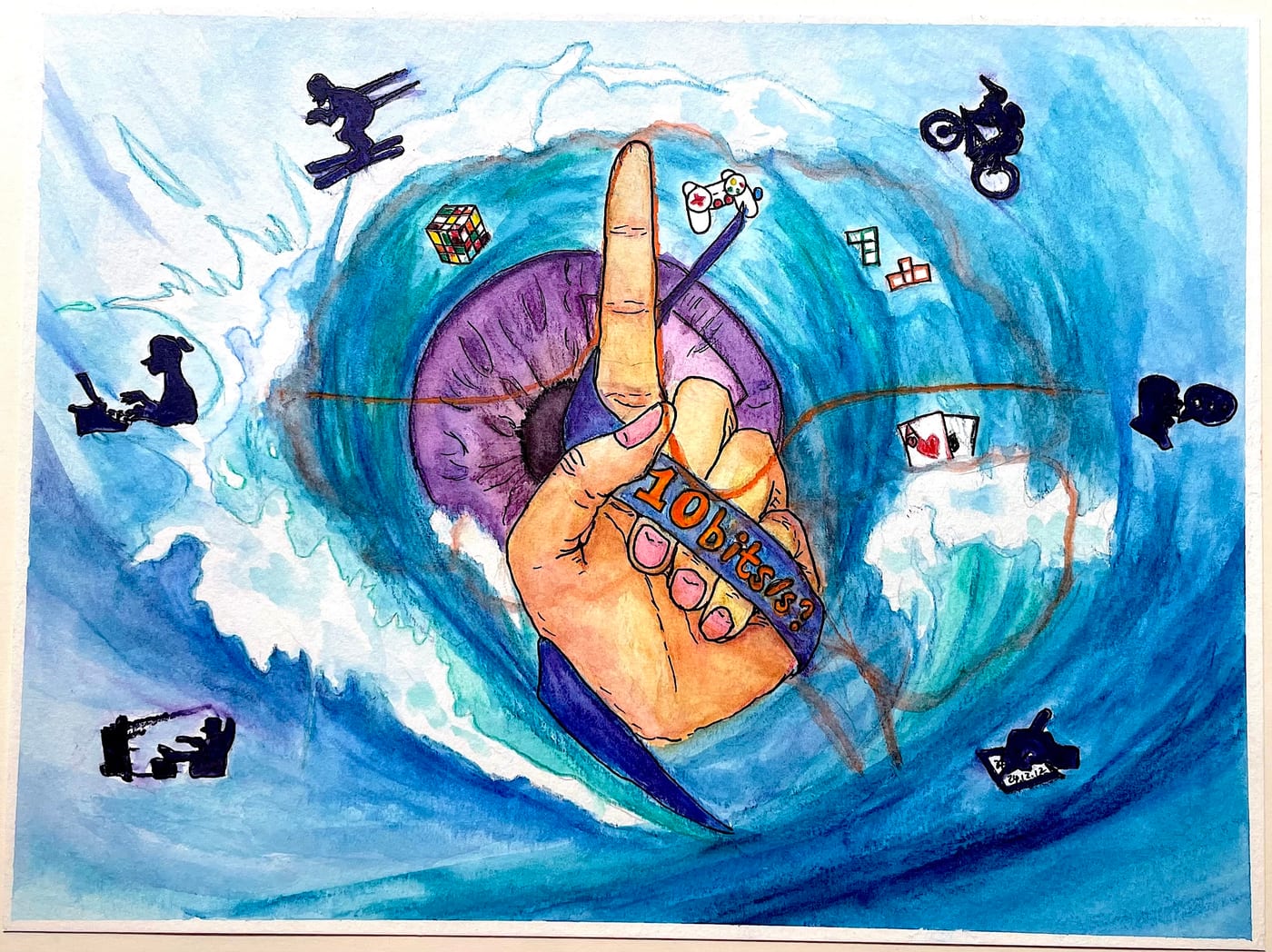 Thinking Slowly: The Paradoxical Slowness of Human Behavior Caltech's news story introducing the paradox that sensory systems gather far more information than human behavior appears to use.
  A propos de l'insoutenable lenteur de l'etre French-language coverage connecting the slowness-of-being idea to questions about cognition and lived experience.
  The Speed of Human Thought Lags Far Behind Your Internet Connection, Study Finds Carl Zimmer's coverage of the paper and its implications for the speed of thought, memory, and brain-computer interfaces.
 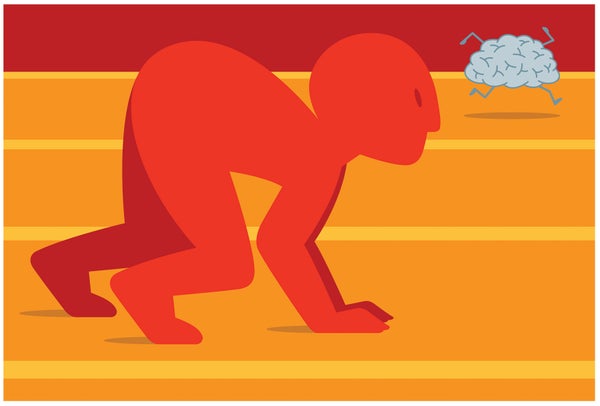 The Human Brain Operates at a Stunningly Slow Pace A science-news explanation of the paper's central claim that conscious human behavior is far slower than incoming sensory data.
  Explaining 'the largest unexplained number in brain science' A Q&A with Markus Meister and Jieyu Zheng about the unexplained gap between neural capacity and behavioral throughput.
  Warum konnen wir eigentlich nur an eine Sache zur selben Zeit denken? German-language coverage on why the brain may be limited to one conscious stream at a time.
  Why Managerial Norms Are Changing To Match New Technologies Coverage that connects the 10 bits-per-second argument to technology and management norms.